
How do you fix fallen LED lights strips? This is a question we get most of the time. To provide a comprehensive answer we prepared this guide on how to re-stick LED strips. We will take you over what might cause the strips to come off, how to put them back, and to prevent them from peeling off again in the future.
How to Restick LED Light Strips
The process of re-sticking LED strips is not much different from when you install them for the first time. However, you will take a shorter time since you won’t be starting the installation from scratch.
Get Rid of the Old Adhesives
Whether you are planning to fix only the parts that have lost stickiness or the whole LED strip afresh, you have to remove the old adhesives from the surface. You can’t simply reuse them because one they form a bond with one surface, they will lose their stickiness and become useless.
So, how do you remove the old adhesives? Just soak an old rag with acetone or a citrus-based cleaner and rub the adhesive vigorously. Be careful not to use too much liquid as this might water-damage your LEDs and interfere with their functionality.
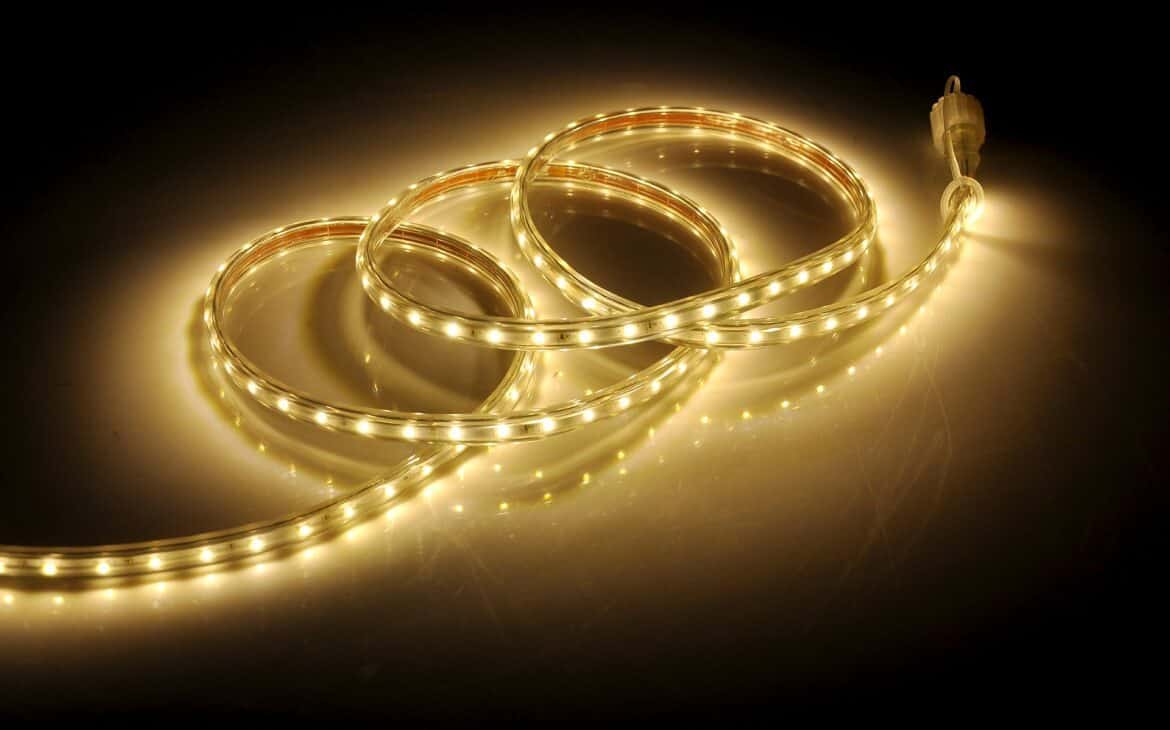
Remove the LED Strips (Without Damaging the Walls)
If you apply your LED strip on a durable surface and make proper use of the 3M adhesive that comes with the strip, chances of your LED lights damaging the wall are minimal. However, if you think you might damage the surface while removing the old adhesives, the simple steps below should sort you out.
- Unplug your LED from the source of power. This is important because live electricity is dangerous.
- Heat the adhesive layer to soften it and make it easier to pull it off from the wall. You can heat using a hairdryer. When heating the adhesive layer, remember to protect your Lumen from excess heat since it might shorten its lifespan. Therefore, make sure to heat for not more than two minutes.
- After you have started an edge piece or a corner, insert either a dull or a flat object like a credit card, a butter knife under the LED strip.
- Twist the flat object to softly separate the LED strip from the wall.
- While still twisting, slowly remove the LED strip off the surface using your other hand
- Continue with the twisting until the LED is completely released from the wall.
- In some cases, tacky adhesive residue may be left on the wall. In this case, use your thumb to softly rub the wall to remove the residues.
- If rubbing the wall with a thumb doesn’t work you can apply either WD-40 or citrus-based hand cleaner to a rag and rub the wall back and forth until the wall is completely clean.
After rubbing the old adhesive off the surface, you can start the process of re-sticking your LED lights. For re-sticking purposes, you can choose from a variety of adhesives such as:
- W3 tape
- Command strips
- Adhesive clips
- Double-sided tapes
- Glue dots
Can I Re-stick LED Light Strips Without Adhesives?
It is not mandatory to re-stick the LED strips using the adhesives. For once, adhesives might damage walls or the furniture due to their aggressive stickiness. Additionally, having failed the first time, you might not want to use them again.
If you decide that adhesives are not the best for you, there are a few more options you can try out. These include:
- Mounting putty
- Cable ties
- Hot glue
Re-stick LED Strips Using Mounting Putty
Most people use mounting putties as a versatile alternative to glue, nails, and staples. To use it to re-stick your LED light strips back in place, first mold the putty into the desired shape. Next, carefully stick it at the back of your LEDs then install the strip on the designated surface.

Re-stick LED Strips Using Cable Ties
Cable ties are popular fasteners that are usually used for cable management. Surprisingly, you can use them as alternatives to adhesives when re-sticking LED light strips.
Ensure that the ties you are using are transparent so they don’t interfere with the light output of the LED strips. As much as this a good alternative, you have to understand that it is not applicable in all scenarios. For example, you cannot use the cable ties around your kitchen cupboards.
Re-stick LED Strips Using Hot Glue
Hot glue is effective because it does not contain harsh chemicals like super glue. Therefore, your LED strip and the surface will be safe from damage. Consequently, when using hot glue, ensure that you regulate the temperature.
If the temperature is too hot, the strip may melt. Although, that is unlikely to happen, always ensure that the temperature is perfect for your strip to avoid further damages.
How to Reuse LED Light Strips
One of the best things about LED light strips is that you can take them with you when moving. They’re not as heavy or time-consuming to install, which means they make for an easy transition from the home base into your new living space. Once everything has been unpacked and set up in a way that looks good on both sides (or just one), stick these pretty lights back where they belong.
As you might be moving to a different room, but want light strips on another wall. If your entertainment system is audio-visual, then bright colored LED lights can interfere with image quality and color tinting, making watching TV detrimental for some viewers (especially if they are sensitive). However, it’s not hard at all getting them off.
Common LED Light Strips
There are a lot of different LED light strips to choose from, and the best part is that you can do so much with them. These devices add ambiance by providing various colors in your room. Experimenting with color combinations will allow you to create beautiful designs on any wall or surface.
Even something as simple as just using one set for lighting purposes makes everything look more cohesive than if there were only traditional bulbs hanging around, too; it seems less daunting when decorating without electrical outlets nearby.
Here are some popular models:
Minger LED Strip Lights
Minger LED strip lights are the perfect way to make your home feel like it’s glowing. Not only do they help brighten up any room, but with colors changing from pink, red, green blue, you can set them in different moods too.
Minger LED strip lights are a fun and easy way to add some extra light anywhere in your house. They come with 16’4″ of power so that you can use them as a bathroom vanity mirror or kitchen worktop from across the room without any loss of brightness. The electric strand isn’t water-proof, though.
In addition, they’re also flexible enough for creative designs that will fit whatever look scheme you have going on at present; whether it’s modern chic or traditional English style, they’ve got something for everyone. It even has remote control included for easier use.
Phopollo LED Light Strip
Phopollo’s LED light strip is the perfect way to make your room stand out. The 65-foot long continuous line of color-changing lights will add that extra WOW factor without taking up too much floor space while also making it easier for you when installing them on any wall type (whether vertical or horizontal).
The thin design also makes installation quick and easy because there’s no need for strings to get tangled together while connecting it all up on top-down below.
Phopollo is a revolutionary new way to light up your home with the latest in stylish, energy-efficient lights. With adhesive backing and remote control capabilities designed for years of use (and no more detached strips), these customizable LED bulbs will make any room come alive.
Choose from multiple colors or get creative by choosing just one color at first then adding on later if desired; they’re so easy even children can do it themselves without the need of an adult to guide them.
How to Prevent LED Strips From Falling Again
After re-sticking your LED light strips, the last thing you want is them coming off again. Although most people have been using 3M tape which is a standard for adhesives, it is not unbeatable. As a result, they have been constantly dealing with the issue of LED strips drooping, falling, or even peeling off the walls. So, what can you do to solve this problem?
Enhance the Strength Of the LED Strip
You can boost your LED’s strength by ensuring that you put adhesives on smooth and flat surfaces. Therefore, before attaching the strip to the wall, ensure that you have cleaned the surfaces.
On the other hand, if your surface is not even, we recommend that you double the adhesive.
Likewise, humid or moist environments can compromise the effectiveness of the adhesive. Thus, you have to ensure that the surface where you are attaching the adhesive is dry enough.
Manage Excess Heat
Additionally, excess heat can affect the durability of the adhesives. The adhesive becomes less durable if it is regularly exposed to excessive heat.
Consequently, if your environment is hot, it may be essential for you to install the LEDs near a window or install an AC vent in your house to regulate heat in your room.
Consider the Gravity
The other thing that you may underestimate is the impact of gravity. As a result of gravity, your LED strip may fall when placed with its sides facing downwards. To avert that challenge, ensure that you have placed the sides of the LED facing upwards.
If it’s hard to place the strip facing upwards, then, try mounting the clips. Alternatively, you can mount a channel that would boost the stability of the setup.
FAQS
Before we finish this article, we find it’s important to address some of the most common questions we receive about re-stricking LED Light strips.
Can You Unstick and Re-stick LED Light Strips?
Yes, you most likely can unstick, and Restick LED light strips. The adhesive backing on most LED light strips is removable and reusable. It’s usually a good idea to test your LED strip lights with some masking or electrical tape after you’ve unstuck them just in case any leftover pieces of the original adhesive might affect the LED strip lights’ performance.
Can I Re-stick My LED Lights?
Yes, you probably can re-stick your LED lights if they are removable backings (most likely they will be). When re-sticking your LED light strips, it’s a good idea to test them with some masking or electrical tape to make sure that you haven’t left any pieces of the original adhesive backing on.
Can LED Light Strips Be Reused?
Most likely, your LED Light Strips can be reused if they have removable backings (adhesive). Whenever you restick them, it’s advised that you test them with some masking or electrical tape just in case there are leftover pieces of the original adhesive backing on.
Is it Advisable to Staple Your LED Light Strips?
Stapling your LED strip is mostly dependent on the staples you use compared to the width of your strip lights. As long as your staples are wide enough, feel free to use them to re-stick your LED light strips.
However, if your staples are narrower than the LEDs, they might pierce through the LED strips and compromise the inside circuitry rendering them unfunctional.
To avoid such a problem, you can get specially designed mounting brackets. The only problem is that you will need to drill a hole in the wall which makes the brackets only viable if you want the strips to stay on the wall permanently.
Can I Use Super Glue to Re-stick LED Light Strips?
Superglue seems like a reliable choice to re-stick your strips light and avoid future frustrations. However, we don’t recommend it. This is because super glue is harmful to materials such as silk, plastic, or polystyrene.
It hardens as a result of chemical reactions which makes it heat and cool rapidly. With time, this reaction makes some materials to degrade.
Basically, it’s not advisable to use super glue if your LED strips contain plastic. Avoiding it would save your strip from the irreversible damage that super glue calluses on plastic.
Do LED Strip Lights Come Off Easily Without Peeling Paint?
The greatest determiner here is the strength of the LEDs adhesive backing and the type of paint that you have used. Several different factors are also at play in this scenario. Paint becomes more fragile with time. Thus, if your paint has been on the wall for many years, there is a high probability of it peeling off with your LED strip.
The same might happen with new paint. While new paint may feel touchy for the first 24 hours, it normally takes around 2 to 4 weeks for the paint to cure. We don’t recommend applying the LED strip to new paint since strips will take part in the curing process.
As a result, the bond between the LEDs and the paint will become stronger than the bond between the wall and the paint. This makes the paint to easily peel off with the strips.
Conclusion
If you had problems with your LED light strips coming off after sticking, we hope this guide will help you. Re-sticking LEDs is an easy process especially if you have prior experience. Make sure to use the right adhesives and avoid aggressive ones like super glue which might damage both the light strips and the wall.